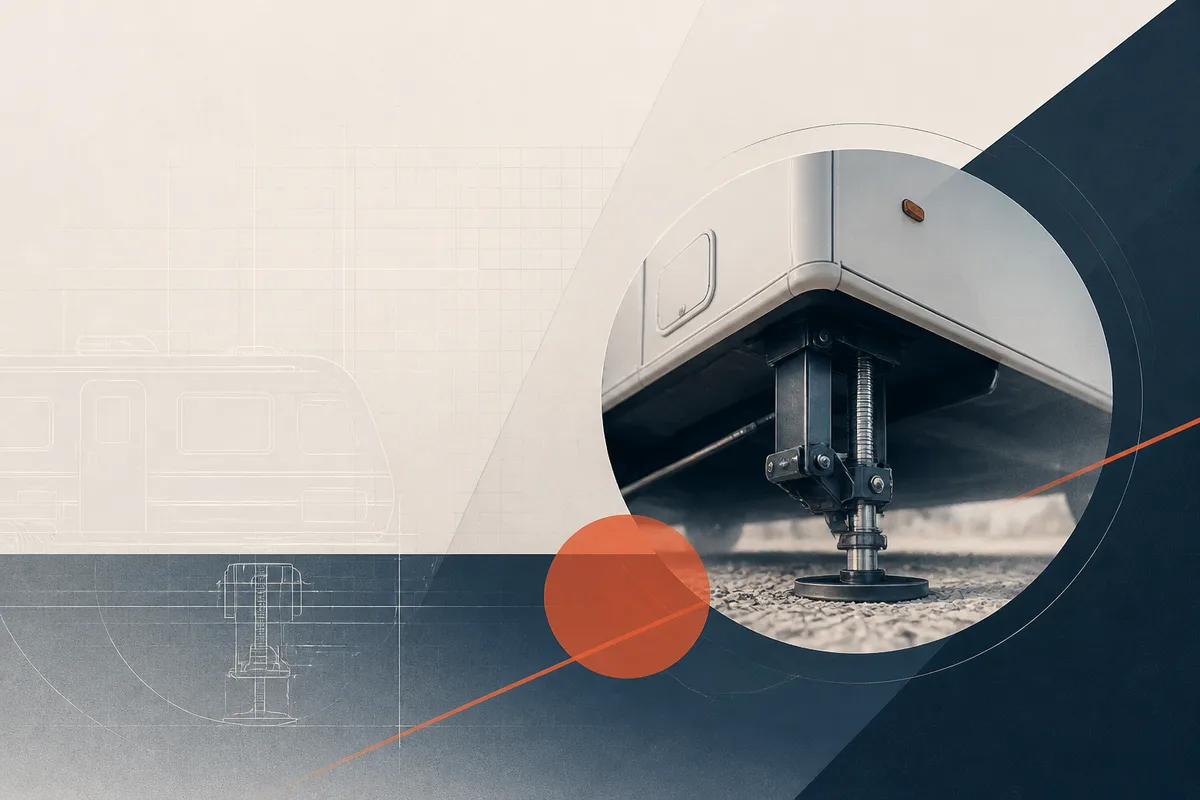
Overriding Stuck RV Leveling Jacks to Get Back on the Road
RV leveling systems typically fail at the most inconvenient moment: checkout time. When you press the retract button and hear nothing but a click—or nothing at all—the mechanical connection between your chassis and the ground becomes a literal anchor. In high-heat environments, electronics are often a common point of failure due to thermal stress on control boards and battery terminals.
Being able to perform a manual override is the difference between an on-time departure and a multi-hour wait for emergency assistance. This guide breaks down the technical steps for manually retracting rv leveling jacks for both electric and hydraulic systems, ensuring travelers can clear a campsite safely without damaging their rig’s suspension or leveling legs.
Why RV leveling systems fail in the desert
Leveling systems are high-draw electrical components that rely on consistent voltage and fluid integrity. In the Southwest, the climate of Phoenix presents unique challenges, as low relative humidity and extreme summer temperatures can impact battery performance and hydraulic seals.
- Battery voltage drops below the threshold required to engage the high-torque motors or hydraulic pumps.
- Corroded ground wires or loose connections at the control box interrupt the signal to the solenoids.
- Hydraulic fluid leaks or valve failures prevent the system from building the pressure needed to pull the jacks up.
- Blown inline fuses or tripped high-amperage breakers stop power before it reaches the leveling components.
The manual override playbook
Retracting jacks without power requires bypassing the electronic controls and directly driving the mechanical or hydraulic components. Before starting, ensure the tow vehicle is connected or the motorhome engine is off, and use wheel chocks to prevent the coach from shifting as the weight transfers.
1Locate the motor or hydraulic manifold
For electric jacks, the override point is usually a nut or hex head at the top or bottom of the jack motor. On hydraulic systems, the override is typically located on the pump assembly, often tucked into a storage bay or behind a frame rail. You will need to identify the specific valves that control each jack leg.
2Clear the valves for hydraulic systems
If you have a hydraulic system, you must manually open the individual solenoid valves to allow fluid to return to the reservoir. This usually involves turning a small screw or T-handle on each valve. Without opening these, the fluid remains trapped, and no amount of manual cranking will move the jacks. For certain systems, using a 5/32" hex wrench to turn the manual override valve clockwise is a key step [https://www.mygrandrv.com/threads/manual-operation-of-lippert-leveling-jacks-without-control-panel.1115578/].
3Deploy the manual drive tool
Most rigs come with a manual crank handle, but a cordless drill with a matching socket is significantly faster. For electric systems, it is often necessary to unplug the connectors going into the jack motor to remove power from the system so it won't try to move on its own [https://greatamericanrv.com/blog/maintenance-tips/how-to-manually-override-lci-electric-jacks-on-your-rv]. For hydraulic systems, the drill usually attaches to the end of the pump motor shaft to spin the pump manually.
4Retract in a balanced sequence
Do not fully retract one jack while others are fully extended, as this can twist the RV frame or put undue stress on rv slide-out repair components and seals. Move the jacks up in small increments, alternating between front and back or side to side to keep the load relatively level until the legs are safely stowed. If the jacks are stubborn, gently rocking the RV or pushing down on the jacks can help them move once the valve is open [https://rvboondocker.com/rv-leveling-jacks-stuck/].
The mechanics of hydraulic bypass
When an rv hydraulic leveling system troubleshooting effort points to a dead pump, the manual process involves converting mechanical energy into fluid pressure. By spinning the pump shaft with a drill, you manually move the fluid through the lines you opened in step two. It is critical to monitor the fluid level in the reservoir during this process; if the jacks were extended for a long period in the sun, thermal expansion might have slightly altered the fluid volume. In some cases, checking if the park brake is on or off may affect system behavior [https://www.facebook.com/groups/rvmaintenance/posts/1681856595836045/]. Ensuring the jacks are fully seated in their travel position is vital before moving the vehicle, as even a partially extended jack can catch on road debris or speed bumps.
How RV Repair of Phoenix helps
When a leveling system fails to respond to manual override attempts, it often indicates a mechanical seizure or a bent jack leg rather than a simple electrical glitch. A professional mobile RV repair service can provide on-site diagnostics to determine if the failure stems from a burnt-out motor, a cracked hydraulic line, or a faulty control module. Standard repairs in these cases involve testing the amperage draw of the motors, inspecting hydraulic cylinders for bypass leaks, and verifying the integrity of the coach's grounding system. A technical inspection ensures that once the jacks are retracted, the underlying fault is corrected so the issue does not recur at the next destination.
Frequently asked questions
Can I damage my leveling system by using the manual override?
If the valves on a hydraulic system are not opened first, attempting to force the pump can blow seals or damage the motor shaft. Always consult the manufacturer's diagram to ensure the fluid bypass is active before applying torque. For electric jacks, avoid using a high-impact driver, as the sudden percussive force can shear the internal pins of the gear housing.
Why won't my jacks retract even when I use a drill?
This often happens if the jack leg is bent or if the internal screw assembly of an electric jack has jammed at the end of its travel. If a rig has been sitting in storage for a long period, rust or debris on the chrome shafts can also create enough friction to overcome the power of a standard cordless drill.
Is a permit required for RV leveling system repairs?
Mechanical repairs to RV leveling systems are typically considered vehicle maintenance. Because these units are classified as vehicles or temporary living units, repairs do not usually fall under standard residential building codes that govern permanent structures.
What size socket do I need for a manual override?
While it varies by brand, the most common sizes for manual override nuts are 5/16", 3/8", or 3/4" hex. It is a best practice to test your sockets on the override points while the system is functioning correctly so you aren't searching for the right tool during an emergency.
Can a low battery cause my jacks to stay stuck?
Yes, leveling systems are extremely sensitive to voltage drops. If house batteries are low, the solenoids may engage, but the pump won't have the torque to move the fluid. Try starting your engine or connecting to shore power to see if the increased voltage resolves the issue before attempting a manual retraction.
Who should I call if I'm stuck in the Phoenix metro area?
If you are located in the valley and cannot get your jacks to budge, you can reach out for professional assistance at (623) 246-7620. Whether you are at a park in Phoenix RV Repair or stored in a remote lot, mobile technicians can typically handle the extraction and repair on-site.
What happens when you get in touch: you describe the situation, we ask the few questions that actually change the answer, and you get a clear scope and next step — no obligation.